
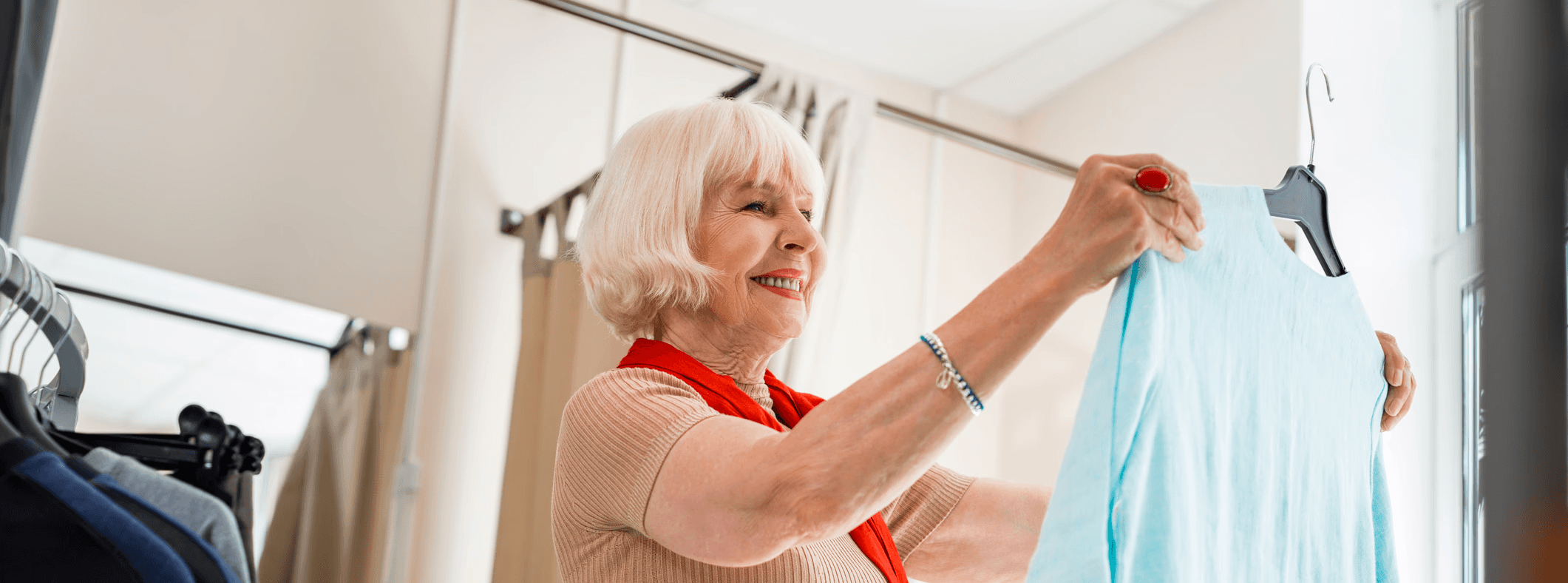
Adaptive Equipment for Easier Dressing & Greater Independence
Getting dressed each day is more than a routine — it’s an essential Activity of Daily Living (ADL) that supports independence, dignity, and self-confidence.
For many older adults, dressing can become more challenging due to decreased range of motion, arthritis, reduced fine motor coordination, balance changes, or post-surgical precautions. The good news? With the right adaptive equipment and simple strategies, getting dressed can feel easier, safer, and even empowering.
Why Dressing Becomes More Difficult
From a clinical standpoint, dressing requires:
Upper and lower extremity range of motion
Grip strength and fine motor coordination
Dynamic sitting or standing balance
Executive functioning and sequencing skills
Conditions such as osteoarthritis, Parkinson’s disease, stroke, shoulder injuries, or general deconditioning can make buttons, socks, and bending increasingly difficult.
But difficulty does not mean dependence.
Adaptive Equipment That Makes a Difference
Occupational therapists often recommend tools that reduce strain while promoting independence.
Button Hook - A simple device that assists with fastening small buttons when grip strength or dexterity is limited.
Sock Aid - Allows individuals to don socks without excessive hip flexion or bending — ideal after joint replacement surgery or for those with low back pain.
Long-Handled Reacher - Helps retrieve clothing from the floor or assist with lower body dressing while maintaining safe body mechanics.
Elastic or No-Tie Shoelaces - Eliminate the need for tying while maintaining secure footwear — reducing fall risk.
Dressing While Seated - Sitting during lower body dressing improves stability and reduces fatigue.
These tools are not “giving in” — they are strategic solutions that support autonomy and safety. And important part of our Restore, Compensate, Adapt philosophy.
Energy Conservation & Joint Protection
Occupational therapy also emphasizes:
Planning outfits ahead of time
Choosing adaptive clothing with magnetic closures or elastic waistbands
Using stable seating with armrests
Avoiding unnecessary bending or twisting
Small modifications can significantly reduce pain and fatigue.
Style Still Matters
Independence and style are not mutually exclusive.
Thriving means feeling confident in your appearance while protecting your body. Adaptive clothing and equipment allow individuals to maintain personal expression without sacrificing safety or comfort.
Because thriving isn’t just about function — it’s about quality of life.
When to Consult an Occupational Therapist
If dressing is taking significantly longer than it used to, causing frustration, or increasing fall risk, an Occupational Therapist can:
Assess functional mobility
Recommend individualized adaptive equipment
Teach compensatory strategies
Provide strengthening and coordination exercises
OTs specialize in helping individuals continue doing the things that matter most — safely and independently.
Thrive with Style
Dressing is more than putting on clothes. It’s a daily opportunity to maintain independence, confidence, and identity.
With the right tools and support, you can truly Dress with Ease and Thrive with Style.
<
>